






PHONICS AND SPELLING
Intent
At West Acton Primary School, we are committed to ensuring that all pupils become fluent readers, confident writers and effective speakers. We achieve this through the consistent use of the Little Wandle (Letters and Sounds Revised) phonics programme, delivering systematic and synthetic phonics from Nursery onwards to build strong foundations in reading and spelling. Pupils develop a secure understanding of the alphabetic code, enabling them to confidently decode unfamiliar words and apply their phonics knowledge across reading and writing.
We aim for all pupils to become confident and accurate spellers who can apply spelling rules and patterns independently in their writing. Through high-quality phonics teaching, explicit spelling instruction and regular opportunities to read widely, pupils develop a growing vocabulary and a strong understanding of how words are structured.
Alongside this, we place a strong emphasis on spoken language through our Voice 21 oracy approach, supporting pupils to articulate ideas clearly, engage in discussion and deepen their understanding through talk. Phonics, reading and writing are carefully integrated across the curriculum, ensuring pupils apply their skills in meaningful contexts. By prioritising language development, reading comprehension and oracy, we give our pupils the tools to read with fluency and understanding, communicate confidently and engage with texts for both purpose and pleasure.
Implementation
We teach phonics throughout the school using the Little Wandle (Letters and Sounds Revised) programme. Our approach is systematic, engaging and inclusive, ensuring that all pupils develop the skills and confidence needed to become fluent readers and writers. Digital resources, including iPads and online platforms, are used to enhance teaching, assessment and intervention across the school.
In Nursery, children are prepared for phonics learning through a balance of child-led and adult-led activities that develop communication, language and early literacy skills. High-quality stories, poems, nursery rhymes and interactive storytelling help children build vocabulary, rhythm and spoken confidence. Focused listening activities, oral blending games and structured talk develop early phonological awareness. We also use cued articulation to support children’s understanding of speech sounds through visual mouth shapes and movements, strengthening pronunciation and early phonological awareness.
In Reception, daily phonics teaching begins in the second week of the Autumn term. Lessons quickly build from short oral blending sessions to full 30-minute lessons. Children learn to read and spell words using Phase 2 and 3 grapheme-phoneme correspondences (GPCs) before progressing to Phase 4 and words containing adjacent consonants. Weekly review sessions help children consolidate learning and build fluency. Common exception or “tricky” words are also taught explicitly so that pupils can read and spell them accurately.
In Year 1, pupils continue to receive daily phonics lessons following the Little Wandle (Letters and Sounds Revised) progression. Teaching revisits Phase 3 and 4 learning before moving on to Phase 5 GPCs, developing increasing fluency and accuracy in reading and spelling. As in Reception, common exception or “tricky” words are also taught explicitly so that pupils can read and spell them accurately. Year 2 pupils revisit and consolidate Phase 5 phonics during the Autumn term through focused daily sessions.
Spelling teaching continues progressively from Year 2 through to Year 6 in line with the National Curriculum statutory spelling requirements. Pupils are taught spelling rules, patterns and high-frequency words through explicit lessons and regular practice. Spellings are displayed in classrooms and pupils are encouraged to apply them across their reading and writing. Children also receive spelling activities and word lists to practise at home, strengthening the partnership between school and families.
Because many pupils join the school at different stages, including those who are new to England or new to English, we also provide Quality First Teaching targeted phonics support in Year 2 and Key Stage 2 where needed.
Assessment is used regularly to monitor progress, identify gaps and ensure timely intervention. Teachers use daily assessment for learning strategies, weekly review lessons and half-termly phonics assessments from the Little Wandle (Letters and Sounds Revised) programme to track progress and plan support. Pupils in Reception and Year 1 are assessed every half term whilst older pupils receiving Rapid Catch-Up phonics intervention are assessed every four weeks. Assessment information also contributes to whole-school reading tracking through SONAR.
Children in Year 1 complete the national Phonics Screening Check in June. Pupils who require additional support receive targeted Keep-Up sessions in Year 2 and beyond and have the opportunity to re-take the Phonics Screening Check at the end of Year 2.
Following assessment, pupils needing extra practice receive extra support through Little Wandle Keep-Up or Rapid Catch-Up interventions. These short, focused sessions are delivered by trained staff using the same consistent routines and resources as whole-class teaching, with smaller steps and increased repetition to secure learning. Cued articulation and digital reading tools are also used to support pupils with SEND and those learning English as an additional language.
Early reading is taught through the Little Wandle (Letters and Sounds Revised) reading practice programme. Pupils take part in three weekly reading sessions in small groups, using fully decodable books matched to their secure phonics knowledge. Each session focuses on one key reading skill: decoding, prosody and comprehension. Prosody teaching is enhanced through oracy approaches such as performance reading, whilst comprehension is developed through structured discussion and questioning. Reading practice begins in Reception during Autumn 2, with additional blending support provided for children who need it and continues throughout Year 1.
Older pupils in Year 2 and above, who still require support with early reading, also participate in targeted reading practice sessions using decodable texts, ensuring that every child develops the confidence and fluency needed to become a successful reader.
Impact
At West Acton Primary School, our phonics, spelling and early reading curriculum is designed to provide a strong foundation for all pupils, ensuring they become confident and competent readers, writers and communicators. Our curriculum is enhanced by our Voice 21 oracy programme and digital technology. By embedding oracy strategies, digital assessment tools and iPad-supported learning, we ensure that every pupil receives the individualised support they need to become fluent, confident readers and accurate spellers.
Through high-quality phonics instruction and progressive spelling teaching, pupils develop secure decoding skills, spelling accuracy and a deep understanding of language patterns. This enables them to read with fluency and comprehension at an early stage and apply their spelling knowledge confidently within their writing. We promote a collaborative approach involving school, parents and the wider community, ensuring pupils receive consistent support both inside and outside of the classroom.
All pupils, including EAL learners and those requiring additional phonics support, make strong and sustained progress in reading and spelling. Pupils develop positive attitudes towards reading, enjoy discussing texts and increasingly read for pleasure both at school and at home. They become confident communicators who can articulate their ideas clearly and apply an expanding vocabulary across the curriculum.
At West Acton Primary School our Phonics Screening Check results consistently exceed the national average year on year. This strong performance reflects the effectiveness of our systematic phonics teaching, early interventions and inclusive strategies that support all learners in developing secure early reading and spelling skills.
Adaptive teaching and Inclusion
In addition to whole-class phonics teaching, we schedule daily small group or individual Keep-Up sessions for pupils identified as needing extra support with their phonics and reading skills. These pupils are assessed at least every half term to ensure they receive targeted interventions suited to their needs. To support our diverse school community, including pupils with English as an Additional Language (EAL) and those with Special Educational Needs and Disabilities (SEND), we integrate cued articulation techniques. This method helps pupils develop accurate pronunciation by supporting them in using the correct mouth shapes and movements, strengthening their phonic awareness and speech clarity. Additionally, we use communication in print symbols to support understanding, particularly for pupils who benefit from visual learning aids. Our commitment to inclusion is highlighted by our achievement of the Gold EAL Quality Mark, reflecting our dedication to providing high-quality support for EAL learners. Through these inclusive and adaptive strategies, we ensure all pupils receive the necessary support to build strong foundational reading skills.
Cultural Capital
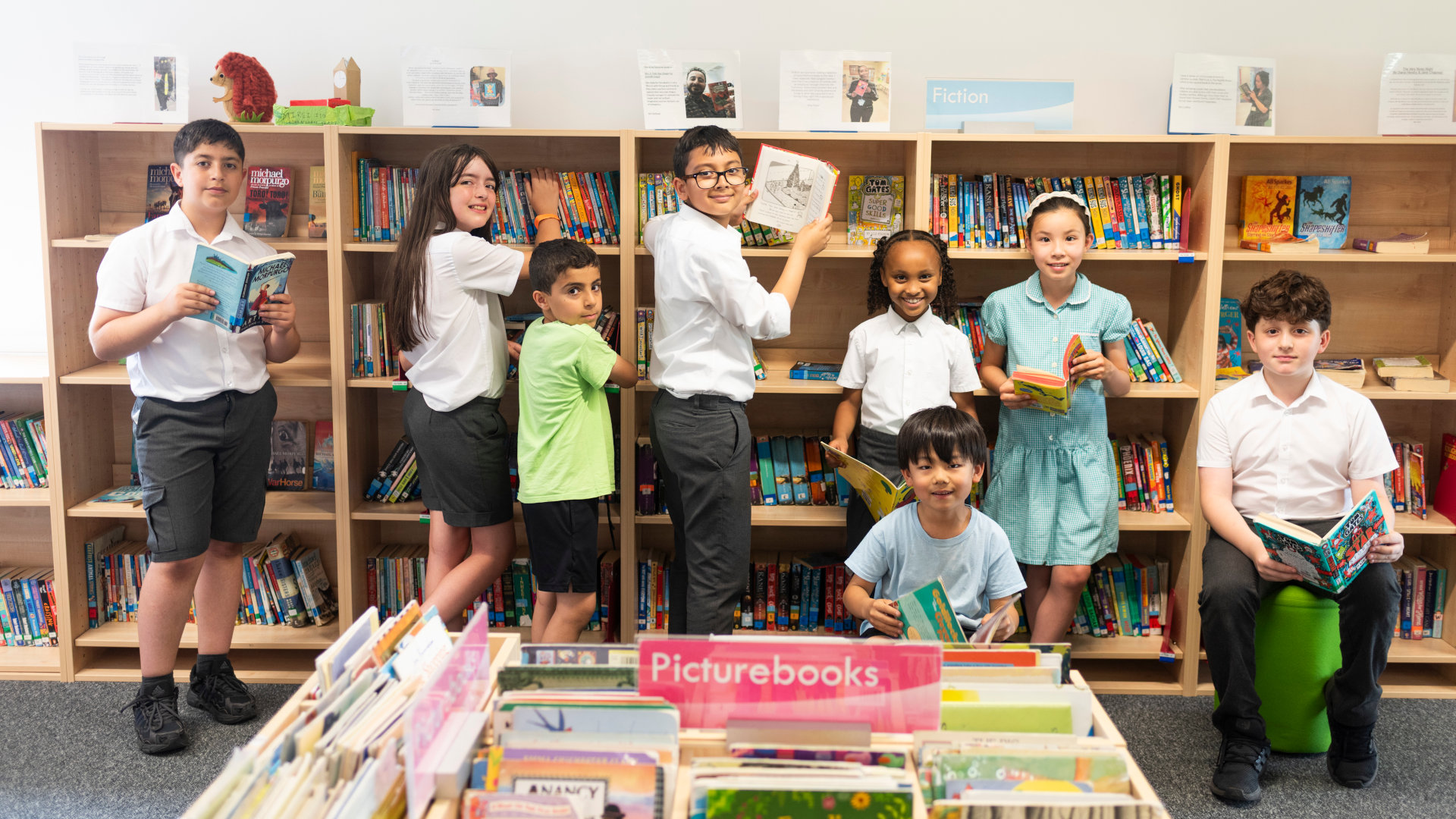
We believe that trips and visits bring reading to life for our pupils. Experiencing stories, books and language in real-world settings helps develop their vocabulary, comprehension and love for reading. In addition to teaching in the classroom, visits to libraries, bookshops, theatres and museums are organised ensuring they link closely to what our pupils are learning in phonics and reading. We also invite authors, poets and storytellers to school, inspiring our pupils to see themselves as readers and writers. We encourage our pupils to talk about what they see, hear and learn, using their oracy skills which helps them to express their ideas and develop confidence in speaking and listening. iPads and digital tools allow our pupils to record their reflections or listen to related audiobooks. Pupils across the school have regular opportunities to engage with a wide range of events such as World Book Day, Book Week, Ealing Book Festival and the National Year of Reading, which support our pupils’ enjoyment of reading beyond the curriculum. These experiences help to build vocabulary and improve comprehension which supports their phonics and reading skills. They allow children to see books as a way to explore the world around them.
We also engage our families and share information about phonics and how children learn to read, the benefits of sharing books and other aspects of children’s reading journey through parent information workshops.
Home Learning
Pupils in Reception and Year 1 take home a phonics booklet every half term which sets out the GPCs, words, tricky words and examples of sentences that the children have been learning each half term. There is also space within the booklet to practise these GPCs and words. Every week a decodable phonics reading practice book is taken home to ensure success is shared with our pupils’ families. A “reading for pleasure” book also goes home for parents to share and read with their child. Pupils from Reception onwards have a home reading diary where parents/carers record comments to share about the books that their child has read. Staff also write messages in the home reading diary to continue communication between home and school. As our pupils progress through our school, they are encouraged to write their own comments and keep a list of the books/authors that they have read taking responsibility for tracking their own reading journey. Pupils from Year 2 upwards, bring home weekly spelling sheets where they can ‘ Look, say, cover, write, check’ to embed the learning of spelling patterns they have practised at school.
Additionally, all pupils have an account with Bug Club, our digital reading platform. Bug Club provides additional home-learning opportunities, ensuring children can access audiobooks and e-books to practise their reading skills at home. Pupils also have Purple Mash logins, where they have access to a digital library.
LINKS TO HELPFUL WEBSITES
1. The Little Wandle (Letters and Sounds Revised) website offers a range of helpful resources, including videos demonstrating how to pronounce each sound taught in Reception and Year 1. It’s a great way to support phonics learning at home and reinforce what your child is learning in school. It also has lots of nursery rhyme videos that the children are familiar with from school.
https://www.littlewandlelettersandsounds.org.uk/resources/for-parents/
2. This useful YouTube link https://www.youtube.com/channel/UCP_FbjYUP_UtldV2K_-niWw contains videos of the Little Wandle Letters and Sounds Revised phonics lessons covering all the phonemes in the order they are taught. To support your child’s learning at home, scroll down to find either Reception or Year 1 and the term that you are looking for, click ‘Play All’ and start from Lesson 1.
Click on the below pictures to be taken to information about each phase.


Spelling Lists


