MATHS

Intent
We aim to develop for all our pupils the ability to be fluent, reason and problem solve in mathematics. We want them to be motivated and confident mathematicians who have a secure understanding across all areas of maths.
We will provide pupils with opportunities to connect, consolidate and reinforce their maths skills within a broad and balanced and purposeful curriculum.
We recognise the importance of fluency in both arithmetic and times tables to ensure that children can access all areas of learning within maths.
Ed-tech will be used where appropriate to engage pupils in maths. Timetables Rockstars and Numbots are used across the school to practice pupil’s additive and multiplicative fluency.We use White Rose Infinity as a question generator to help review and practice learning. A variety of online digital tools are used as pupils to help with visualising mathematical concepts.
Pupils should be able to explain their mathematical thinking through class discussions. Stem sentences are provided in order to help explain their reasoning. Pupils will use their Oracy (Voice 21) skills in maths discussions.
Implementation
Maths lessons take place every day for approximately 1 hour in KS1 and KS2. From Nursery to Year 6, pupils are provided with opportunities to develop and improve their skills in maths through experience and a variety of representations include concrete, pictorial and abstract. Every child will be exposed to reasoning and problem-solving questions at their level to ensure that they are applying their knowledge and able to use it in 'real-world' scenarios.
In Years 1 to 6, the school’s plans are based on the National Curriculum and the White Rose Scheme of Learning. West Acton Primary follows the calculation policy in the White Rose Scheme of Learning, following the concrete, pictorial, abstract method. The expectation is that most pupils will move through the programmes of study at broadly the same pace. However, decisions about when to progress should always be based on the security of pupils’ understanding and their readiness to progress to the next stage. Those who are not sufficiently fluent with earlier material should consolidate their understanding, including through additional practice, before moving on.
In KS1, we use Mastering Number which has been embedded in KS1 for a few years and has been introduced into Reception. The aim of this programme is for children to leave KS1 with fluency in calculation and confidence and flexibility with number. Mastering Number in KS2 aims to improve fluency in multiplication and division facts and flexibility with number when looking at multiplicative relationships. This is taught in Years 4 and 5.
Pupils who grasp concepts rapidly are challenged through being offered ‘stretch’ problems before any acceleration through new content. We have developed ‘Reaching Deeper’ activities for teachers to use with these students.
Arithmetic strategies are taught in explicit lessons and these are revisited throughout the term to ensure that they are embedded.
Teaching for Mastery
Mastering maths means pupils acquiring a deep, long-term, secure and adaptable understanding of the subject.
The phrase 'teaching for mastery' describes the elements of classroom practice and school organisation that combine to give pupils the best chances of mastering maths.
Achieving mastery means acquiring a solid enough understanding of the maths that’s been taught to enable pupils to move on to more advanced material.
At West Acton we have adopted a ‘Teaching for Mastery’ approach across the school. The expectation is that the majority of pupils will move through the programmes of study at broadly the same pace. However, decisions about when to progress should always be based on the security of pupils’ understanding and their readiness to progress to the next stage. Pupils who grasp concepts rapidly should be challenged through being offered rich and sophisticated problems before any acceleration through new content. Those who are not sufficiently fluent with earlier material should consolidate their understanding, including through additional practice, before moving on.
Vocabulary
We introduce children to new words in order to develop their mathematical understanding further. In the teaching of maths, children are encouraged and supported to identify synonyms for known mathematical terms and use correct terminology when describing mathematical concepts. This is re-enforced through the use and repetition of stem sentences – a sentence structure including key vocabulary to explain a concept but missing variables that will change by question. Key maths vocabulary is displayed on the working wall and accessible to all learners through use of pictorial representations when possible.
Impact
Our solid results across the school – in both statutory and non-statutory assessed year groups –validate the successful use of the White Rose scheme of learning that is now used consistently throughout the school from R-6.
The mastering number schemes have shown to help pupils 'fill in gaps' in their number knowledge to keep up with their peers. The mastering number scheme was newly introduced to Reception pupils last year and continues to be taught daily.
Pupil voice shows that children enjoy maths even its challenges. Pupils see maths as engaging and enjoy championing their achievements in the subject.
Pupils are showing and applying a 'mastering of number' in lessons through 'Reaching Deeper' opportunities in class.
Times tables assessments using TT Rockstars has shown improvement in recall of multiplication facts and engagement of learning times tables for Year 4 practice Multiplication Check
Cultural Capital
At West Acton, we aim to provide our children with the courage, skills and aptitude to enable them to make a difference in the world. By becoming confident mathematicians, our children will have access to the exciting opportunities available to the young people of the future.
We believe it is important to enable children to access maths across a broad spectrum, which includes applying their learning to other subjects taught in school and to ‘real life’ situations. This will provide them with the essential knowledge needed to be educated citizens, helping to stimulate an appreciation of human creativity and achievement. Throughout their learning in maths, our pupils have the opportunities to connect, consolidate and reinforce their maths skills within a broad and balanced yet purposeful curriculum. A striking feature of West Acton is our diverse community not only in ethnicity but economically and emotionally.
We are very proud of the way our curriculum, especially our maths curriculum, reinforces this unique feature of our school whilst developing pupils' understanding and consideration of their own lives and those of others.
Home learning
The home-school partnership is sustained through homework, workshops for parents/carers and half termly letters going home in advance informing what the following half term’s maths focus will be. Pupils are expected to practise and consolidate their core arithmetic skills. Children in Years 1 – 6 are given a CGP book to practice maths skills. We have also subscribed to Numbots and Timestables Rockstars and the children are expected to complete these daily.

ONLINE RESOURCES
West Acton subscribes to several high quality online resources for which a login is needed. Logins will be provided by your class teacher.
Below are details of how each online resource specifically applies to maths.
 |
Purple Mash |
 |
To improve fluency in times tables. |
 |
for maths practice |
-
Parent Resources

VIDEO LESSONS
These short videos were originally produced to provide primary school pupils with interactive lessons while they were learning at home. Parents or teachers can now use them in school or at home, but it is important that, within each batch, they are set in the suggested order. Most lessons are between 15 to 20 minutes long, each ending with suggested follow-up tasks.
 |
 |
 |
 |
 |
 |
 |
 |
 |
 |
MATHS IN READING
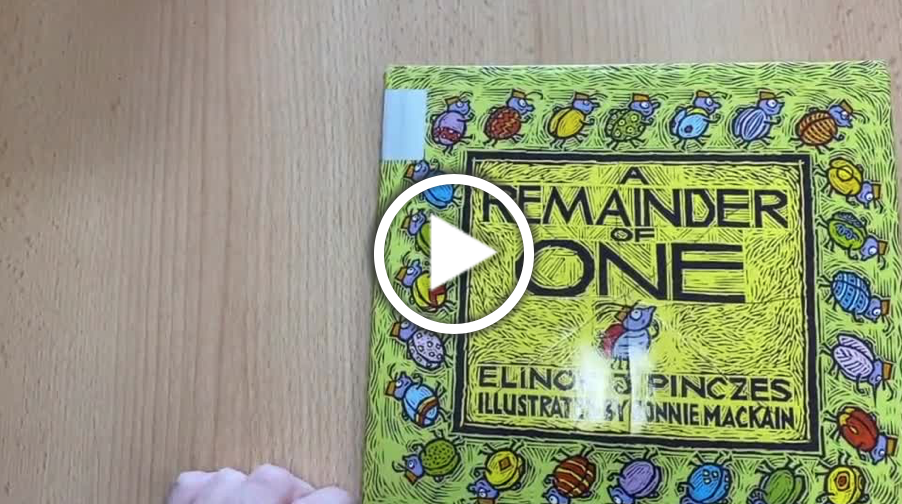
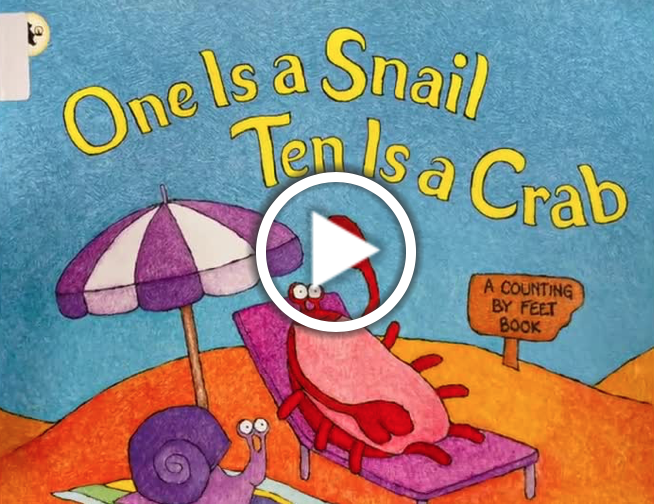
Picture books can be a fantastic way to introduce children to new maths concepts - even up to Year 6. Below are some booklists and videos which show a selection of maths-themed picture books that open opportunities to explore a range of mathematical concepts.
|
- |
- |
|
|
One is a Snail, Ten is a Crab |


 |
 |
MONEY TWIST
In Years 4 and 5 we deliver Money Twist, funded by Kickstart Money and delivered by MyBnk. It is a financial education programme designed to help set positive money habits and mindsets from an early age. The expert trainers deliver live and secure lessons to our school as pupils complete activities in class. This is combined with teacher resources and family challenges.
The programme consists of an assembly and three sessions led by expert trainers and complemented by resources for teachers and carers. Case studies, games, videos and popular culture are all used to encourage students to explore and form their own opinions on money and their relationship with it.
There are three workshops, differentiated for Lower KS2 (7-8 year olds) and Upper KS2 (9-11 year olds).
FAMILY MONEY TWIST
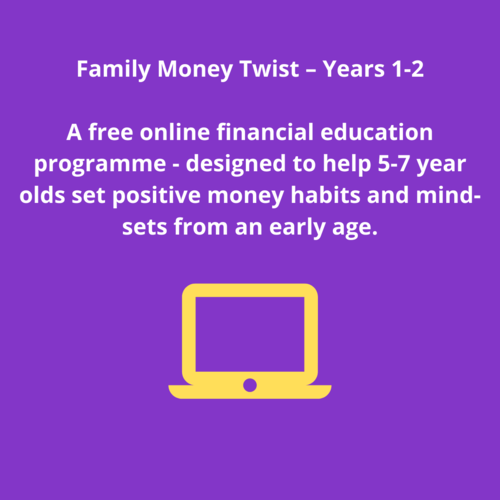
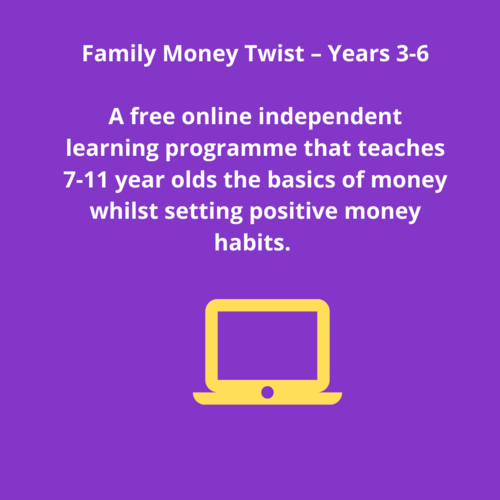
KickStart Money has also funded a free online financial education programme, which can be completed at home by children aged 5-7, with the support of a guardian, and aged 7-11 independently. These home-learning sessions have been designed to complement our Money Twist primary school offering to bring money to life and begin a child’s financial education journey.
Family Money Twist is designed to improve childrens’ understanding of the value of money and delayed gratification by making spending and saving decisions and gaining rewards, by tackling often difficult topics such as income and the household finances. Sessions cover key issues of where money comes from, everyday costs, needs and wants, tracking spending and saving.
There are two online programmes, differentiated by key primary age groups:
 ------------------------------------ |
 ------------------------------------ |
 |
|
Royal Institution - Maths Masterclasses
West Acton Primary School are proud to organise and host Royal Institution Maths Masterclasses for year 5 students from schools in the local area. For further information on attending, please contact the school here.
Our online Maths Masterclasses will also be posted below:
|
Bridges of Konigsberg Accompanying Worksheets: ------------------------------------------------------------- |
Patterns in Primes Accompanying Worksheets: ------------------------------------------------------------- |